Toggle navigation

SUCCESS!
We look forward to helping you advance your career as a travel nurse!

Born and raised in Rosebud, Texas with a population of approximately 1,300 people, Courtni Sladek, always had the urge to travel, but she never expected her travel nursing career could also be her way to explore the country.
Discover your dream travel assignment here.
The desire to become a Pediatric Intensive Care Unit (PICU) nurse came to Courtni when she was a high school senior band student performing at Texas Scottish Rite Hospital for Children, in Dallas. “In high school I was a band nerd and played the clarinet,” said Sladek, “Every year we’d have to do at least one performance at a children’s hospital, and in my senior year it hit me that I wanted to help these kids. Plus I’ve always said I have the food and movie taste of a five year old, so it just makes sense.”
Courtni attended the University of Mary Hardin Baylor and received her Bachelor of Science in Nursing (BSN) degree. Afterwards she continued working in Texas until her third year of nursing when her husband, Ryan, gave her the push to pursue a career in travel nursing.
New travel nursing jobs available here.
“I had mentioned travel nursing before, but it was actually Ryan’s idea to pick up and move,” said Sladek, “It’s the most rewarding decision I’ve ever made for my life.” The Sladek couple’s original goal was to pursue a life in the Travel Nurse industry as a way to find a location suitable for them to settle down, but four years later they are still happy to be driving around the country every three to four months.
They’ve taken on a total of 14 assignments, and lived in destinations such as Chicago, Las Vegas, New York City, and Baltimore, but out of all of the places San Diego has been Courtni’s favorite. “I still say San Diego is my Soul City. We lived a quarter mile from the beach and definitely took advantage of the boardwalk and the great views,” said Sladek.
Explore the country while getting paid! Find assignments in your dream city here.
Along with being near the beach and in exceptionally warm weather, the hospital that where Courtni worked made her feel like like she was had been working there for 30 years. “There was something about Rady Children’s Hospital –, the people I worked with were great, and the staffing were set well and made it feel like you were supported,” said Sladek.
Throughout each assignment Courtni has not only grown with in her knowledge of all the cultural differences that from state to state, but she has also grown her knowledge in the nursing field.
“One of main challenges that I’ve seen while working as a travel nurse is the different nurse mentalities,” said Sladek, “people do tasks in their own way and if one unit does it a specific way, then they may think your way is wrong.” Courtni said that even though this has been one of the hurdles she has had to deal with while being a travel nurse it has actually helped her personally, giving her more confidence in knowing that she is doing her job well, and letting go of her insecurities. “Coming into a new unit and potentially being judged by the way you do things definitely breaks you out of your comfort zone and allows you to be different,” said Sladek. Although there are minor challenges when it comes to being a travel nurse, the benefits can usually out way the hurdles.
“Definitely just do it. Bite the bullet and and do it,” said Sladek, “The most important thing is to do more than one assignment. Do it for a year with three of four assignments. You’ll learn a lot, I know I have. ”
RNs can make up to $2,300 per week as a travel nurse. Speak to a recruiter today!
Travelnursing.org interviewed travel nurse Kyle Leffel, RN about what advice he would give to new nurses preparing to travel.
New travel nursing jobs available here.
Should I look to diversify my specialty?
I would say focus more on what you already know, rather than attempt to learn something completely new.
Remember, when you are working as a travel nurse hospitals and other facilities are not paying you to you learn your nursing skills. They are paying you because you are considered to be an expert in your given specialty. They expect you to “hit the ground running” so to speak.
What certifications should I get?
It is universal that you have to obtain your CPR/AED and basic life support (BLS) certifications regardless of your specialty, but each specialty will also require specialized certifications.
For example, if you are like me and like cardiac progressive care units, you better know your EKG’s and heart rhythms like that back of your hand because this is a must have, and you can expect them to test you on them.
Certifications are fun to learn, and are one of the many tools that nurses learn in order to save a life, but remember each certification has to be renewed at some point. So the more you obtain the more money you have to spend in order to keep it.
Discover new travel assignments in your specialty here.
Which certifications are the most widely accepted?
CPR/AED and BLS certification are a must have in every facility, but the caveat is that they have to be certified by the American Heart Association. I have seen nurses get turned away because they were certified by the American Red Cross and not by the American Heart Association.
If you are going to travel I would suggest getting certified in CPR/AED, BLS and ACLS with the American Heart Association. This will just make your life easier when applying for jobs and contracts.
Is working in a hospital preferred over other types of facilities?
Yes – if you want to travel I would suggest getting some experience in the hospitals. If you have never worked in a hospital system before and expect to take contracts in busy hospitals, employers may shy away from you. Not because you’re a bad candidate, but you are not familiar with all the hospital dynamics.
Also, the vast majority of the contracts are for hospitals. So you will greatly improve your chances of finding contracts if you are familiar with the hospitals.
Any advice on using my first year as a nurse to give me a leg up as a travel nurse?
In my honest opinion, I think you should have two years of nursing experience before traveling.
Your first year should be focused on your basic foundations of being a nurse. Use this time to develop your “rock star” assessment skills. You need to be extremely comfortable with your assessment skills before traveling; because that’s the last thing you need to worry about while traveling to a completely new work environment.
You don’t want to be listening to your patient’s lung sounds and wonder “is that crackles or rails I hear?” I say this because I have seen young nurses with only a year of nursing experience crack under the pressure, during their first assignment.
Your second year should be dedicated to a specialty of your choice. Take this year to learn all the little things about it – doesn’t matter what specialty it is, just get to know everything!
Most importantly make sure you love what you’re doing! If you love what you are doing, it will show and you will be an amazing travel nurse.
To learn more about Kyle and his decision to become a travel nurse, check out A Journey into Travel Nursing.
For more on this series:
Travelnursing.org interviewed travel nurse Kyle Leffel, RN about his experience in choosing the best staffing company.
Did you have a list of deal breakers in mind that helped eliminate potential agencies? (If yes) What were they?
Not really, for me I looked around online. I would read what reviews were posted about the company, and I also relied heavily on what my friends told me. I had a couple of nurses, that I use to work with refer me to the companies that they have traveled with. It seems most companies offer very similar benefits and wages.
Discover your dream travel assignment here.
Can you describe any specific “red flags”?
Absolutely! For myself, I really focused in on how I was being talked to during my first phone call. If the recruiter talked more about how much money I was going to make, or just simply wanted all my contact information up front, then I knew they were only interested in completing a sale. The company I choose to travel with focused on me, and wanted to give me an amazing travel experience. After all, that’s what is most important.
Another red flag for me was web site design. I wanted to make sure the company I was going to work for looked professional. So if they didn’t take the time on looking professional, then I would often worry about what else they are cutting corners on.
How were you able to tell if an agency had your best interest in mind?
I could tell if the recruiter really had my best interest in mind when they focused most of our conversations on what they could do for me. They never really push a bunch of dollar signs or anything at me, instead they focused on where I wanted to travel. Did I have an all-time bucket list of travel locations? Or what could they do to make our experience something we would always remember? This was very comforting to me. I felt like this company really had my back.
In your experience, are recruiters usually pretty helpful or do they tend to be pushy?
I think this question kind of ties into all the others. Honestly, you get both types. I have talked with some very friendly recruiters, and then I have talked to some very pushy “money driven” recruiters. It’s very easy to distinguish the two different types. If I am interested in choosing to work with a company, I will contact you. To me, it looks very desperate and pathetic to have the recruiters cold call me. To this day I still get at least two emails and one new voicemail a day from company’s trying to recruit me. I think the really good and helpful recruiters are often referred to by another nurse. The pushy recruiters are friendly but there is probably a reason why they are so pushy.
Match with a travel company here.
What is your advice on comparing compensation, i.e., what is the best way to get a complete picture of compensation?
In regards to compensation and travel nursing, my best advice would be to not make it about the money. Either way, you will still get paid pretty well. Travel nursing is about the experience of getting paid to travel. But it is still important to know the basics of compensation. You get paid based on what your contract states. A good recruiter will go over all of this with you before you sign anything. For me I made sure I was guaranteed full time hours for my whole contract, so I was covered there. You can also get more money if you choose to find your own housing. Most companies will let you pocket the money on what it would cost them to find you housing. For example, let’s say it costs Company ABC $800 dollars a month for a fully furnished apartment with all utilities included. Now you can either take their housing option or you can take that $800 extra a month and pocket it. Then try to find your own housing that could be cheaper. This is called taking the housing stipend. This is great if you have friends or family in the area you are working at, and they let you stay there for free.
Are there any lesser known perks that I should ask about?
Not really, I mean you can build your contract how you want too. But the more you add into a contract such as a rental car, or want to fly everywhere it’s going to still cost you in the long run. So it’s really important to discuss these things with your recruiter. They usually know how to build contracts and add in all the little extra perks. A good recruiter will know how to wine and dine you. My recruiter sent my wife and I little care packages. I think on my first contract he sent us a foot masseuse, an official NFL sweat shirt of my favorite football team, T-shirts, hats, candy, gift cards, and some other stuff. It meant a lot to me because it showed that he cared enough to think about us, all while making sure we were enjoying our time away from home.
What are three questions I should ask every recruiter?
Find your next travel assignment here.
To learn more about Kyle and his decision to become a travel nurse, check out A Journey into Travel Nursing.
For more on this series:
Travelnursing.org interviewed travel nurse Kyle Leffel, RN about his experience with the NCLEX.
I actually took the NCLEX twice. I think that is partially because I didn’t take enough time nor did I prepare for the test the right way. After I failed my first attempt at the NCLEX, I took the second attempt much more seriously. I dedicated over three weeks to prepare for it and most importantly I learned a valuable lesson of reaching out and getting some help. I never liked asking for help. I felt like it made me look weak and incompetent. But as I learned during my career as a nurse that asking for help is actually a very strong and respectful attribute.
Find your next travel assignment here.
When I was preparing for my first attempt at the NCLEX I thought I could study on my own. So I used several different types of books out there. I even made my own flash cards. But after I failed my first attempt I learned that what I did before was not enough. So I did some research and enrolled myself in the Kaplan review course. I think that really helped me. During the course they helped me identify my weak areas and explained how to approach each question. It also gave me all the study materials needed in order to be successful. I really enjoyed the flash cards they provided me because I would use them while I was at work, or if I went out to eat with my family. I would sit down and drill myself everywhere I went. I used the practice tests they provided to me as I got closer to taking the exam. I also enjoyed the practice tests and questions from the Saunders NCLEX review books. I think those questions most closely resembled the actual NCLEX questions, at least when I took it.
Discover your dream travel assignment here.
Honestly, the worst resource for me was my “on the job” work experience. This is because sometimes the real world and the NCLEX world differ. So while I was answering the NCLEX questions, I was picturing and using the experience from the hospital to answer the questions; which was actually the worst thing for me to do.
The overall process of applying, scheduling and taking the test was pretty simple. But the worst part was preparing for it. It was brutal and difficult. I still give me chills just thinking about taking that test. Going into the test, there are so many unknowns. You have no idea how many questions you are going to get asked, and you have no idea what type of questions it is going to ask you. All you do know is that you are expected to take a test with up to 300 questions, with the possibility of it ending after answering 75 questions. I have always been a person where I like to know things and plan ahead, so not knowing something drove me crazy. So this didn’t help my test anxiety.
Yes and no. During the end of my nursing program, they did a good job of explaining what the test was going to be like. So taking the test was just how I pictured it would be, but I did not expect to fail the first time. I really felt like I had the knowledge and the “on the job” work experience to prepare me for it. So it was hard on me not passing the first time around. But when I did pass it, it was the biggest feeling of relief I have ever felt. I remember after running around in my backyard as fast as I could run, until I was too tired to continue my little celebration run. After spending years of dedicating myself in nursing school I finally reached my goal of becoming a Registered Nurse.
Click here to find new travel assignments.
Nothing, because I don’t think I would be as lucky the second time around. My mistakes have made me who I am today. I am a big believer in that making mistakes makes us better at what we do. Ultimately we never want to make any mistakes, especially potential mistakes that could do harm to others. But the fact is that I was able to recognize and own my mistakes, which has always put me in position to learn from them. By doing this I was able to triumph over them, as Henry Ford has said “Those who never make mistakes work for those of us who do. “
As a nursing student, the NCLEX will be the most difficult test you will ever have to take. But once you pass it, just know that you will (hopefully) never have to take it ever again. Take your test prep as if you are about to run a marathon. People who are running marathons don’t sprint threw the whole race, nor do they take prepping for one lightly. It takes days, weeks and sometimes even months of preparation for one. The more you prepare for it, the more likely you will pass it. Take practice tests to help you identify your weak areas. Once you have done that get use to sitting down in one spot answering question after question. Focus and do everything you have to do, in order to pass it the first time around. If you don’t pass it the first time, don’t freak out. Refocus and recognize that you need some help.
Find travel assignments in your specialty here.
To learn more about Kyle and his decision to become a travel nurse, check out A Journey into Travel Nursing.
For more on this series:
Interview With A Travel Nurse: Preparing to Travel Before Nursing School
Interview With A Travel Nurse: Preparing for a New Facility
Interview With A Travel Nurse: Sure-fire Signs You Are Working With The Wrong Company
Interview With A Travel Nurse: How To Prepare To Be A Rock Star Travel Nurse – Before You Are One
Interview With A Travel Nurse: What Was Your First Travel Assignment Like
 Travelnursing.org interviewed travel nurse Kyle Leffel, RN about how he usually prepares to start new assignments at different facilities.
How much research on your new facility did you do before your first assignment?
Honestly, I didn’t have to do much. If you are traveling with a great company and a great recruiter like I did, you shouldn’t have to do much. My recruiter included many emails, phone numbers, maps and all the other details I needed for my first day of orientation. It was a very streamlined process and made me feel very relaxed, especially on my first contract.
Discover your dream travel assignment here.
What do you normally try to learn about your new location before you arrive?
Before arriving at my new location I try to learn what’s around the area. I love the outdoors so my wife and I would always try to find local hiking trails and parks. We would also want to see what local attractions are in the area. While we were in Arizona we attended a local renaissance festival and it was awesome. Each new location offers its own unique attractions and local restaurants, and we loved discovering them.
Do you usually try to make any connections on social media before you arrive?
No. At least I never did. I usually made all of my connections during my first day of orientation. Most of the time the hospital I went to needed the help of travel nurses as well. This is where I met most of my travel nurse buddies. They made great companions for all of the much needed nights out.
How long does it usually take you to get up to speed at a new facility?
For me it didn’t take long, but this can vary from person to person. Partially because it depends on how much experience you have as a nurse before traveling. I am very confident in my nursing assessment skills and I don’t require much time to knock out a solid assessment. The hardest part is learning the doctors, your standing orders, and the overall flow and dynamics of the unit. I was usually comfortable after 2 or 3 weeks. If I ever had a question or a problem, the staff, unit manager, and my recruiter was always there for me. I usually never had to include my recruiter in anything, but when I did he would call the unit manager directly and everything would get solved in less than 24 hours. Both the hospital staff and travel nursing company want you to have a positive experience. They will always be there for you.
Click here to find new travel assignments.
Were most hospitals pretty similar to your home facility?
There was never a lot for me to learn about the facility itself. Most facilities are the same. Once you learn the layout of the units and of the hospital itself, it becomes like home to you. Some facilities are really nice, while others could use some upgrades. But within each facility lies an opportunity to learn something new from a fellow coworker. It could be from a helpful physician or even from another travel nurse. Having this ability to travel to a new location every three months, presents a great opportunity to work with other skilled professionals and learn a new trick of the trade.
Are there any deal breakers regarding a facility that would make you deny an assignment?
Yes! For me I wanted to be guaranteed my hours. I wanted to make sure I got my three twelve hour shifts in a week. Another thing I would check would be how close I was living to the facility. I didn’t want to have a long commute into work. So if the facility was out in the middle of nowhere, I was likely to shy away from that facility. Another thing I would make sure to be aware of is if the facility did not include a contract cancelation clause. This would basically protect the nurse in the event your facility wanted to cancel a contract. Without it, a facility could cancel an assignment for no reason. Thus, leaving me in the middle of nowhere without a paycheck coming in.
Connect with a staffing agent here
What is the most surprising thing you have seen at a new facility?
Every facility is different. When a facility calls for the added help from travel nurses, we are often there for that reason, to help. It could be due to a nursing strike or simply due to an unusual high census. So I have never really walked into a new facility expecting anything shocking, or even anything surprising. But there was this one facility out west that I will never forget. It not only surprised me but impressed me as well. This facility housed a very large work out facility for all of its employees and even had a swimming pool. I had never seen this before, and it really showed me that this organization had its employees’ health in mind. It had a little spa room for free massages and everything. As nurses, we are constantly exposed to physical and emotional stress. So it was very comforting to me to see this. Hopefully all health care facilities will follow suite.
Find travel assignments in your specialty here.
To learn more about Kyle and his decision to become a travel nurse, check out A Journey into Travel Nursing.
For more on this series:
Interview With A Travel Nurse: Preparing to Travel Before Nursing School
Interview With A Travel Nurse: How to Recover From Failing the NCLEX
Interview With A Travel Nurse: Sure-fire Signs You Are Working With The Wrong Company
Interview With A Travel Nurse: How To Prepare To Be A Rock Star Travel Nurse – Before You Are One
Interview With A Travel Nurse: What Was Your First Travel Assignment Like

By Kyle Leffel, RN
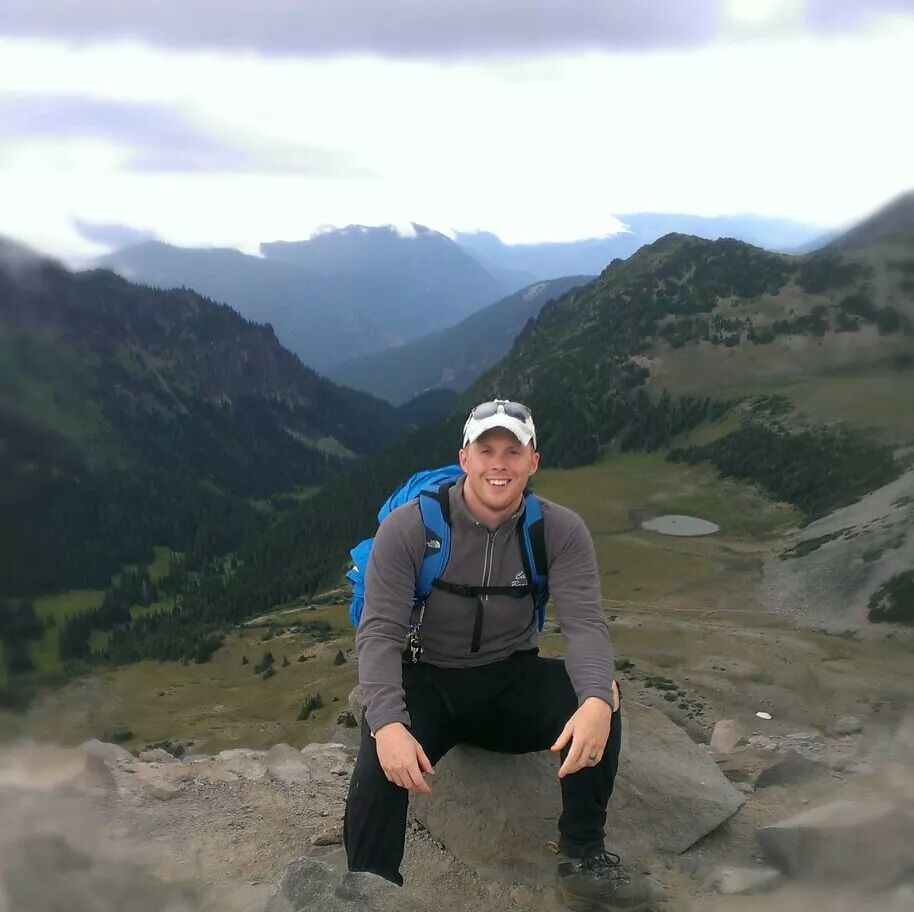
Kyle Leffel has spent much of his travel nursing career by working up and down the west coast. He has spent the majority of his nursing career in cardiac critical/progressive care. Kyle Is currently working in his home state of Indianapolis, IN as a medical administrator with Medcor. When Kyle is not working, he is enjoying the trails and wilderness by backpacking and kayaking with his friends and family. You can follow Kyle on LinkedIn.
Everyone has a story about how they became a travel nurse. We interviewed one nurse to see how he prepared before, during and after becoming an RN.
Discover your dream travel assignment here.
When deciding to become a nurse, was travel nursing always a part of the plan?
Yes, before entering into nursing school I knew that I wanted to travel, but I did not know all the fine details about the role. Nursing schools hit the high points of what travel nursing is, but fails to deliver the overall positive experience a nurse can have from it. I knew this was something I wanted to do, but I did “tip toe” into travel nursing with a lot of reservations because if it sounded too good to be true, then it probably was. Much to my surprise I was wrong! It was everything I was told and much more.
Click here to find new travel assignments.
How did your plans to travel effect your nursing career?
I did not cater my nursing career to become a travel nurse. There was no need too. The most important qualities a nurse must have, in order to be a successful travel nurse is the ability to communicate, have strong and confident assessment skills, a sense for adventure, and be comfortable with changing work locations every three months or so.
Were there any travel nursing requirements that made you nervous?
The only requirements that I was made aware of was that you needed at least two years of experience, before applying to become a travel nurse. That frustrated me as a nursing student because two years seemed so far away.
Connect with a staffing agent here
What was the biggest challenge you had when starting your travel career?
The most difficult part was getting my first contract. I did not know where to start and was overwhelmed with the process.
How did you overcome this obstacle?
For me, the key was finding the right travel nursing agent to represent me. Choosing the right company made what could have been an overwhelming experience a breeze.
Did travel nursing play a part in choosing your specialty?
Travel nursing never played a part into my decision of getting into critical/acute care. For me, I enjoyed the critical care world. I loved helping people in the most critical times of their lives, so I was naturally drawn into that specialty. Then when I decided to become a travel nurse, they found open jobs for me based on my experience and current certs. Nurses with specialty jobs always get paid a little more also, so that’s always a nice perk!
Find travel assignments in your specialty here.
To learn more about Kyle and his decision to become a travel nurse, check out A Journey into Travel Nursing.
For more on this series:
Interview With A Travel Nurse: Preparing for a New Facility
Interview With A Travel Nurse: How to Recover From Failing the NCLEX
Interview With A Travel Nurse: How To Prepare To Be A Rock Star Travel Nurse – Before You Are One
Interview With A Travel Nurse: Sure-fire Signs You’re Working With The Wrong Staffing Agency
Interview With A Travel Nurse: What Was Your First Travel Assignment Like
RNs can make up to $2,300 per week as a travel nurse. Speak to a recruiter today!