Toggle navigation

SUCCESS!
We look forward to helping you advance your career as a travel nurse!

Whether you’re searching for the perfect gift for Nurses’ Week or something special for you, these fun items will let the nurses in your life wear their pride.

Find it here: TheTenderBox
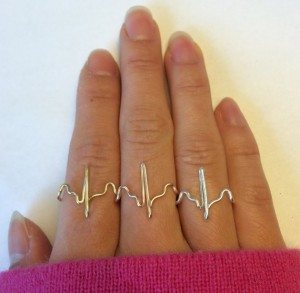
Find it here: Wireninja

Find it here: DestinationLtd

Find it here: bagitwithkfcreations

Find it here: ShirtsBySarah
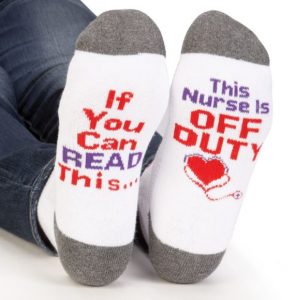
Find it here: Positive Promotions

Find it here: Cheerfully Gifted

Find it here: RonnyPop
If you are one of the many nurses considering a career in travel nursing, you’ve probably heard how great it is and you’ve probably also heard some horror stories. Many of the negative experiences involve being assigned the worst patients, having to work every weekend, or being bullied/ marginalized by your co-workers. Allow me share my perspective from my experience as both a travel nurse and a staff charge nurse.
Interested in becoming a travel nurse? Sign up today.
When it comes to being assigned the worst patients, I think it’s important to define what is meant by “the worst.” As a staff ICU nurse, I was used to taking the sickest of the sick: balloon pumps, CRRT, ECMO – you name it, I took it. On the other hand, as a travel nurse, I was assigned what I would consider the easiest patients. They were “walkie talkies” who required a different kind of care. I wasn’t tending to machines anymore, I was tending to people and it was something that I had to get used to. I personally enjoyed taking a break from the intense patients and working on my people skills. As a charge nurse, I often assign travel nurses the easier patients because I am not familiar with their skill level. If a travel nurse has extended with us a couple of times, then I feel more comfortable assigning them more critical patients.
I think where assignments get tricky for travel nurses is when they have to float. In most hospitals, travel nurses are the first to float, so an ICU nurse floating to telemetry may feel like he/she is getting the shaft or being marginalized in some way. Remember, your purpose as a travel nurse is to fill a need that a hospital has. If that hospital needs flexibility in their staffing, then you need to be flexible. Your contract should say whether or not you are required to float. If this is something you think you can’t handle, then it may be wise to choose your assignments accordingly.
Explore the country while getting paid! Find assignments in your dream city here.
Choosing your assignment to fit your needs is extremely important for your satisfaction, especially when it comes to scheduling. I have never had an experience as a travel nurse where I had to work every weekend and every holiday. The units I chose to work on had self-scheduling with a weekend and holiday requirement that was the same as the staff nurses. Your schedule may not be exactly what you asked for, but it is usually close. If you know you need some time off during that assignment, it’s important to have those dates ready when you interview so they can be written into your contract. If your contract is for night shift, then you work night shift. I have never heard of a unit making you work a shift other than what your contract states.
When interviewing for your assignment, it is important to ask how often the unit you’ll be working on has travel nurses. There are some hospitals who have an alarming amount of travel nurses working for them. I feel this puts a burden on the staff nurses which may lead to what some might consider bullying or poor treatment. You will find that most people don’t talk to you for the first few weeks. This isn’t because they don’t like you it’s just the way it is sometimes. If you are open and friendly, you will find it easier to connect with your co-workers. If you are quiet and keep to yourself, then people probably won’t approach you. Choosing a unit that has a few travel nurses has always seemed to be better in my experience. The nurses were less stressed, the onboarding process was more thorough, and the management seemed to be more supportive.
Ready for an adventure? Start here.
Having a supportive management and leadership is important whether you are a staff nurse or a travel nurse. There are some units which handle matters with travelers personally, and then there are some that prefer to go through the nurse manager at your agency. Personally, I preferred to have management talk to me directly about issues rather than going through my agency. If you are someone who prefers a less confrontational route, then it is extremely important that you have a good relationship with your recruiter and your agency’s nurse manager because they are going to be your main support system. Except for one instance, my experience with nursing leadership has always been positive.
Having a positive travel nursing experience is ideal but not always guaranteed. You may have an assignment where you get the worst patients or terrible co-workers. Just remember, it’s only 12 hours or 13 weeks; it is not the rest of your life, and what doesn’t kill you will only make you stronger. Don’t let other people’s horror stories scare you away from travel nursing. Create your own positive experiences instead.
In the world of travel nursing, maintaining your own Continuing Education Units (CEU’s) is of utmost importance. You can no longer rely on your pesky nurse educator to hunt you down making sure you complete all of your required learning for the year; it is up to you to make sure you stay up to date on the latest and greatest in healthcare.
As a travel nurse, it is very likely that you’ll have to apply for a nursing license in at least one other state or many others depending on the extent to which you travel.
Applying for another license always requires a background check and in some instances, fingerprinting through a national database. This process isn’t difficult, but it can be time-consuming and requires some patience.
Your travel nurse agency will be able to walk you through the process. In addition to background checks, some states require certain CEU’s in order to acquire a license in their state.
For example, the state of Florida requires specific CE’s on domestic violence, HIV/AIDS, and preventing medical errors to acquire their license. After you receive your RN license in Florida you then have to complete a minimum of 24 CEU’s in order to renew your license every 2 years and also pay a fee.
If you have a compact nursing license, you will have to maintain your home state’s CEU requirements and complete any additional mandatory learning depending on the other compact states that you travel to. Depending on which state you hold your original nursing license and how many other licenses you maintain, keeping up with CEU requirements and fees for each state can be costly. Here is a list of all states and their CEU requirements.
The topic of license reimbursement becomes key when choosing a travel nursing agency and negotiating contracts. It is important to go with a company that offers free accredited CEU’s.
Accreditation means that the American Nurses Credentialing Center (ANCC) has identified that CEU provider as an organization that uses evidence-based ANCC criteria to implement the highest quality of care. This allows nurses to choose high quality CEU’s that meet their licensure requirements.
Non-accredited CEU’s have not gone through the rigorous application process and have not met the standards for continuing education according to the ANCC. Most states will not accept these CEU’s as valid, so be careful not to pay for non-accredited CEU’s. It is pretty standard for travel nursing companies to offer free CEU’s or at least reimburse you for the cost. However, it is not standard for these companies to reimburse you for the cost of the actual license. If there is a high demand for travel nurses in a certain location, make sure you request to have your license fee reimbursed. If they need you badly enough, they will likely reimburse you.
If you do happen to choose a company that does not offer free CEU’s, don’t worry, there are plenty of other ways to obtain your Continuing Education Units. I can’t tell you how many times I have received pamphlets in the mail for CEU’s.
The state of California even sends out an entire booklet with 30 CEU’s in it. I think the booklet cost $35 and all you have to do is mail in a form. You don’t even have to take a test!
I always kept my eye out for education hosted by the hospitals I was currently working in. Most of these education days are free and award CEU’s. Most people aren’t aware that Basic Life Support (BLS) renewal offers 2 units while Advanced Cardiac Life Support (ACLS) renewal provides 4 units.
Most national nursing organizations such as the American Association for Critical Care Nurses (AACN) offer a plethora of CEU’s if you belong to their nursing organization. If you prefer to learn online and in your own time, here are a few websites that offer CE’s: Continuing Education for Healthcare Professionals, Online CEU’s, and MyFreeCE.
I know when nurses hear the term CEU, we all tend to cringe. However, the fact is, health care and how we deliver it is constantly changing. We’ll never know it all and our system will never be perfect. CEU’s provide us with the knowledge and power to grow ourselves and improve the safety and efficacy of the way we deliver care.
Travel nursing allows you to see the country, gain new personal and professional experiences and help fulfill the needs of medical facilities that may be underserved.
This type of work can be immensely gratifying and quite lucrative, but many people are hesitant to dive into travel nursing because they don’t want to have to worry about their house.
The good news is that owning a home and becoming a travel nurse, or extending your travels, don’t have to be mutually exclusive. There are concrete steps you can take to rent out your home while you travel so that you are earning income and building equity.
Ready to start your travel nursing adventure? Apply now!
Even if you don’t own a home in a popular vacation destination, you might be surprised to find out just how many bookings you can secure from people who are traveling for both business and pleasure.
When Airbnb first started gaining traction, guests would arrive at their destination and check-in with the host face-to-face. It quickly became evident that this wasn’t always the ideal way to handle check-ins. As any traveler knows, there are a myriad of things that can go wrong and get you off schedule. That made the logistics and organizing a meeting inconvenient for both guests and hosts.
As a result, more and more hosts began to offer self check-in as a solution. In fact, self check-in is a requirement in order for a property to be listed as a business friendly host. This means that you can be working anywhere in the country and guests can safely check into your home and enjoy their stay.
You might be wondering what happens if something goes wrong and your guest needs assistance while you are halfway across the country. The solution is to partner with an Airbnb management company. An entire industry of management companies has grown out of the popularity of Airbnb. These companies will help you market your listing, improve visibility and bookings and be there to solve problems for your guest when you are away.
Renting out your home as an Airbnb is an excellent way to pay your mortgage and enjoy the benefits of travel nursing without having to sell your home or put off buying a home.
Discover new travel assignments in your specialty here.
If you have been thinking about signing up for your next travel assignment, but are hesitating about making the commitment because you are worried about the best way to maintain and manage your home while you are away, why not connect with other travel nurses? There is no better way to find a reliable and responsible renter with short-term needs. Another travel nurse will understand the particular demands associated with the job, which include finding furnished housing close to work.
There is no better way to find a reliable and responsible renter with short-term needs. Another travel nurse will understand the particular demands associated with the job, which include finding furnished housing close to work.
The biggest challenge to renting your home to other travel nurses is effectively advertising that your home is available and connecting with people in need. It is always a good idea to notify your travel nursing agency, but you will also want to reach out to travel nurses through other avenues. The travel nursing Facebook page is a good place to start. It has over 18,000 members and is dedicated to helping nurses find home and rooms for rent.
It is always a good idea to notify your travel nursing agency, but you will also want to reach out to travel nurses through other avenues. The travel nursing Facebook page is a good place to start. It has over 18,000 members and is dedicated to helping nurses find home and rooms for rent.
Another option is the website FurnishedFinder.com, which serves a wide variety of healthcare professionals who need to travel and secure furnished housing for over 30 days. The one disadvantage is it costs $99 to list your property. That being said, the site also offers vetting and verification tools that are meant to protect renters and property owners, which may be well worth the additional cost.
Live in your dream city while doing what you love.
Owning a home doesn’t mean that you can’t enjoy all the great benefits that go along with being a travel nurse. In fact, owning a home can be a real asset and serve as an extra source of income.
Your best bet is to either list your property on Airbnb and work with a management company or to rent to other travel nurses. Both options will allow you to travel the country meeting new people, experiencing new places, building your professional portfolio and making more money than you would at home.
Perhaps best of all, at the end of your contract, you’ll have a cozy and familiar place to return to and start planning your next adventure.
Ready to start your travel nursing adventure? Apply now!
Being a travel nurse is exciting and possibly one of the most memorable things you will do in your nursing career. With that said, it seems that with all good things in life, there’s the possibility that bad things will follow.
Travel nursing is fun and very adventurous but without taking certain safety precautions, your memorable journey could quickly become a nightmare. I want to share with you a few important safety tips I used when I traveled so you can be better prepared and have just as memorable of a time as I had.
Start you travel adventure today!
Before I started my first contract as a travel nurse I made sure I made a good connection with my travel nursing recruiter. Your travel nursing recruiter is usually your first contact for any safety or general concerns about an assignment. So you want to make sure that you can trust the person you are working with. Make sure you have a good way to reach them in the event you need something right away. For example, a good travel nursing recruiter will give you his/her personal cell phone number so if you ever have a question about something they will be right there to help you. When my wife and I were traveling across country for the first time, my recruiter would call us throughout the drive to check up on us. He would make sure we were on time and if we encounter any problems. This personal relationship was great to have and know that he was always there for us. He was AMAZING!
Get matched with a staffing agent here.
Communication is very important when you are away from home because if you ever need anything your family or loved ones can help you. So always try to remember to keep everyone in loop with your travel plans. If you are flying be sure to let them know what flight you are on and your estimated time of arrival. They can jump online and track your flight while en-route and then you can simply call or text them when you arrive.
If you are like myself and like to drive it’s very important to plan ahead. Don’t rely on your phone especially if you’re traveling out west. I don’t care what those cell phone commercials say; you will lose cell phone reception from time to time so always plan to have a backup. I always printed off a map of my route just in case my GPS stopped working. I also gave a copy to my parents so they knew my route and each stopping point. That way if we ever got lost or went missing they knew where to direct help if we ever needed it. I also kept a portable external battery with solar charging capabilities, and a car cell phone charger with me so when my cell phone provider was sucking up all of my battery power for service, I had plenty of backup options to help keep us charged.
Get paid while seeing the country – start now.
If you are traveling by road or even by air make sure you do your homework, and know where you are going. Make sure your stopping points are well-populated locations with plenty of people around, especially if you are traveling alone. Be confident and don’t look lost or out of place because the last thing you want to do is walk up to a total stranger and say “Hello! I am lost, alone, with no cell phone service and have no idea where I am. Will you be so kind and help me.” That’s the classic plot to every horror movie! So to prevent yourself from getting into that situation, plan ahead and know where you are going! You can use various apps or websites to help you pick good locations to stop at. My wife and I used Google search and Yelp.com. They have great reviews from people like you and me. If either of those options does not yield results, reach out to your nursing recruiter for help. They often know great places to visit or might help you connect with another travel nurse in the area who can.
Find open travel assignments here.
Whether you are traveling or going out for a night in the new town, make sure you are with a good group of people. These people can help keep you away from bad parts of the town and also help you enjoy your new location. I would always ask my fellow nurses “where’s the best place to eat?” or “where are the good and bad parts of town?” By connecting with others you can find local and safe places to go. Don’t be afraid to reach out to your co-workers. They know the area and are often times excited and are more than willing to help you.
I think it goes without saying this but just in case, if you ever feel like you are having a life threatening emergency always call 911 first. Sometimes the unfortunate can happen to us because we are more vulnerable to an environment we are not familiar with. So it’s very important to always to keep your safety and well being in mind. Always think to yourself “Just in case.” For example: I should call my parents and let them know where I will be tonight, just in case. I should plan out my travels and check on the hotel I am staying at, just in case. I probably shouldn’t pick up that hitchhiker, just in case. This saying has saved me from a few headaches along the way, so maybe it will help you.
When all goes according to plan, being a travel nurse is a great and extremely rewarding opportunity! Hopefully a few of my safety tips can help you prevent a future issue or problem from occurring. But just in case, you can always get into contact with me on LinkedIn.com. I would love to hear about your future or ongoing travel nursing journeys. Stay safe and enjoy your travels.
Make lifelong friends across the country while doing what you love!
Nursing is a labor of love. Like most labor, it can be exhausting, frustrating, and often times, thankless. What gets you through it and keeps you coming back for more? Some would say caffeine or pillow-screaming, but I think the best remedy is to share some laughs with your nurse compadres. These memes perfectly sum up what it’s like to be a nurse at my hospital.




Travel nurses make up to $10k a month plus a sign-on bonus. Get paid today!


The time is now! Start your travel nursing adventure today!


Forget hospital politics. Enjoy the freedom that comes with being a travel nurse.


In any hospital or healthcare facility you will find nurses, doctors, technicians and other support staff working around the clock to ensure proper care is being given to patients. While patients are sleeping, we are there to keep an eye on them, and ensure they are safe. But this responsibility comes with its own health risks for the night shift healthcare worker. Our bodies were not made to stay up all night and operate as so. I still remember working my first night shift while on a travel assignment. It was a very difficult adjustment for me, considering all my previous experience was in day shift hours. Here are some helpful tips for staying healthy and ensuring an easy transition into a night shift role. They worked for me, maybe they can help you.
Explore the country while getting paid! Find assignments in your dream city here.
It can be grim trying to switch into a night shift role, especially when you’ve never done it before. Trying to stay awake and maintaining mental focus for twelve hours at night can be difficult. Try to get as much sleep as you can and be consistent. Even on your off days try to stay awake during the night. Last thing you want to do is keep flipping around your sleep schedule multiple times during the week. This can be very hard on your body including your metal health. If you find it difficult trying to initiate sleep during the day, try taking a melatonin supplement. This could help you.
What really helped me was incorporating strategic naps before going into work. My schedule was pretty routine. I would get home, take a shower, sleep for four to five hours, wake up, eat and then take a two hour nap later in the day before the start of my night. I did the same thing every day. I tried my best not to alter my schedule unless I absolutely had to. Being consistent really helped me keep a solid sleep cycle and prevented too much sleepiness during my shift.
Get paid to travel. Sign up today and start traveling next week.
Eating healthy foods during your night shift not only has its nutritional benefits, but it can also can help you get through your night. Bright colored vegetables have a lot of vitamins and minerals in them to give you natural energy. Try to stay away from fatty foods during the night. This can be very tempting but a greasy heavy sandwich with fries will just weigh down your stomach, and make you more prone to being tired and contribute to weight gain. Keep the foods light and healthy. I often found myself snacking more than eating large meals. Also, try your best to resist large amounts of caffeine and coffee. This will often make the sleepiness worse, and will lead to a large energy crash halfway through your shift. Believe me, I learned that lesson the hard way.
Working out was really difficult, especially while working night shift but I would still force myself to do something prior to going to bed. This light exercise would often help me get tired, and sleep longer when I was able to go to sleep. It would also help keep myself in shape!
If you can work in an area where the bright lights don’t bother patients, keep them on. I would often try to establish my work station near an empty room, were my lights wouldn’t bother a sleeping patient or I would just stay close to the nurse’s station. If my workstation was dark, I would often become sleepy and be glued to my computer screen, since it was my only source of light. While working around the bright lights, it made me think it was still daytime outside and kept me awake.
Find out if you have what it takes to become a travel nurse today.
This is one tip I wished I learned earlier in my career. Especially when I was working night shift in Arizona. When I sleep, I want it to be dark and during the day in Arizona it’s almost always bright and sunny. Which provided plenty of opportunity for some light to shine through my curtains and blinds. I would finally just start to fall asleep and then a small sliver of light would start shining in my eye. This would obviously become very frustrating for me, and it would often prevent me from going back to sleep. My advice, buy some blackout curtains and tape those bad boys to the windows. Seal them shut or better yet, sleep in a basement with no windows. Whatever room you choose to sleep in during the day, try to make it as dark as possible. This will help ensure a solid and consistent sleep cycle.
My final and probably most important tip is to know when to ask for help. As a nurse, I understand that we will often put others needs before our own. But working night shift and consistently changing up your sleep schedule can have long term effects on your body, and your mental health. If you feel like something isn’t right or you can’t get a consistent good night sleep talk with a doctor. They could help you put together a successful plan to help you get a good night’s sleep.
Beginning a career as a travel nurse can be both exciting and frightening. Hearing about some of the mistakes seasoned travelers commit when first starting out, you realize that plenty of us have made the same ones.
Here are 7 mistakes that seem to happen to nearly every new travel nurse.
Ready to start your travel nursing adventure? Sign up now.
All nurses have made a charting error at one time or another and travel nurses can be even more likely to make this mistake because they’re always having to learn new record systems. Depending on the facility, it seems like the initial orientation to the electronic medical record system is only as long as one class.
With only have a few hours to learn a foreign charting system, some nurses chart in the wrong section, failing to document the completion of a task appropriately. If this occurs with medications, the next shift will not be aware which could cause some serious problems.
Do whatever you can to make the most of your orientation by taking notes or repeating what you learn out loud. Remember, it’s only weird if it doesn’t work.
Assuming that certain policies and procedures are universal is an easy mistake. When there is a critical lab value, does protocol say to contact the physician or does protocol allow you to act?
Not knowing the protocols by the time you are on your own can be detrimental. No one likes having to call the doctor in the middle of the night, especially to be yelled at.
While you may not be able to memorize all of them immediately, it’s important that you know how to find protocols quickly. Which brings us to the next mistake new travel nurses tend to make.
Want to travel on someone else’s dime? Qualified nurses can do just that!
A big mistake new travel nurses make is not asking coworkers for help. Since travelers are expected to be experts in our field, we do not want to seem inexperienced by asking for help.
New travel nurses should find a mentor on their unit that they can go to for questions. It is better to ask for help than to make a medical error and endanger a patient’s life.
New travel nurses will be surprised to find that many of the permanent nurses can be helpful and kind.
Travel nurses make up to $10k a month. Sign up today and start traveling next week.
As travel nurses, we often have two options for housing. We can either have the agency book our apartment and furnish it for us; or we can opt for a stipend to find our own housing.
Many times, travel nurses opt to find their own housing because they can find something reasonably priced, and keep the remaining funds.
However, some new travel nurses make the mistake of underestimating how long it actually takes to find housing on their own.
I know plenty of new travel nurses that ended up having to live on a friend’s couch for the first couple of weeks because they couldn’t find housing as quickly as they thought they would.
Make sure you start your housing search well in advance or just take agency housing for your first assignment and get to know the housing options for the next time you’re assigned there.
Another mistake regarding housing is getting more space than you need.
I know a new travel nurse that rented a two-bedroom apartment during her first assignment. She quickly regretted spending all that extra money when she realized she did not need all of that space.
Make sure you factor in your lifestyle before deciding how much room you need.
Are you the the type of person that likes to come home and unwind after a long day at work by curling up with takeout and Netflix? If so, you might appreciate a little extra room to spread out.
Or do you use your apartment more like a crash pad, only spending time there to shower and sleep because you’re always out exploring your city? If that’s the case, you might not mind a small apartment for a few weeks in lieu of spending that money on things you’re actually doing.
Always wanted to explore the United States? Now you can get paid while you do!
New travel nurses often do not realize that they can turn down a housing option if they do not like it or if it is in a bad area.
If do you opt for the agency to find you housing, make sure you do not settle for housing that you would feel uncomfortable in. You can also ask for an upgrade in furniture such as a king bed vs a queen; or a pull out sofa vs a regular one.
The transition from working permanently to becoming a travel nurse often comes with better pay. Since the pay is usually more than their current salary, a lot of new travel nurses just accept the first offer provided to them.
They don’t realize they can negotiate and ask for more money. New travel nurses should do their research. If you’re heading to California from Florida, you should be aware that the pay should almost double.
Often new travel nurses will compare their pay and benefits when starting a new assignment with other travel nurses on their floor. It is quite disappointing to learn that you’re doing the same work for less money. Don’t let that happen to you.
Travel nurses make up to 10k a month! Start earning more today.
These mistakes are pretty common amongst new travel nurses. While you may be able to avoid the ones mentioned here, many travel nurses can agree that these experiences are part of the learning process of becoming a travel nurse.
In the end, they are only small ripples in an adventurous and stimulating life of being a travel nurse! Luckily, the travel nurse pool continues to grow, and new travel nurses can easily find peers to help guide them through the process.
Ready to start your travel nursing adventure? Sign up now.
We all know what they say about opinions. But alas, that is what this article is about, my opinion on the top 5 states to travel to. However, I’m going to go ahead and pull the experience card. I may not have been to all 50 states for this to be 100% accurate but I am about to start my 15th assignment and my 5th year of traveling, so I do know a few things and want to share them with you.
So without further ado, here are the top places for travel nursing – from an actual travel nurse’s point of view.
Find your dream assignment here.
This probably doesn’t come as a surprise to anyone. Once you get past the craziness that is the licensing process, California is easily my favorite spot to travel to. California has everything you could possibly want from a travel assignment – great pay, stunning beaches, lush forests and mountains, and so many things to do you couldn’t get bored even if you tried.
In northern California you can expect to make about $45-50 per hour, and that’s not even including any type of housing, housing stipend, or meals reimbursements. You’ll also find cool summers, fun in San Francisco, and the picturesque Redwood National Park.
Southern California will satisfy your Mexican food cravings, help you work on your tan, and allow you to finally learn to surf, an activity not limited to summertime. Southern Californian hospitals typically pay around $30-$35 per hour not including housing or meals.
Never fear snow bunnies, no matter where you are in the state of California, you are within driving distance of beautiful resorts and great skiing. Not mentioned yet are the many amazing hospitals you’ll have the opportunity to work at. A few of the award-winning hospitals are UCLA Medical Center, Cedars-Sinai, UCSF Medical Center, and Stanford. If you plan your assignments right, you can have an entire year of sunny 70 degree weather.
Apply now for travel positions in California!
An entire article could be written about all the things New York City has to offer. Tons of history, prestigious hospitals, and something to appeal to every single person in the world. No matter what time of the year you go, you will never run out of things to do . Central Park in the summer is great for biking, running, and sightseeing. In the wintertime, cold weather calls for indoor activities like going to the Metropolitan Museum of Art, the Natural History Museum, seeing a Broadway show, eating at any of the top-rated restaurants, or take advantage of some of the greatest shopping in the world.
Traveling to NYC will give you the chance to work at New York Presbyterian Hospital and NYU Langone Medical Center where you can expect to bring home approximately $45 per hour. With everything NYC has to offer, money is the last thing on my priority list.
New York is waiting. Start your travel nursing adventure now.
When I think of Colorado, the following things come to mind: professional sports, the great Rocky Mountains, and delicious craft brew. The city of Denver is known for the Broncos and Rockies, however it is also known for its variety of microbreweries and craft beer. If you choose to partake in the adult beverage and consider yourself a “beer snob” or “connoisseur” then Denver is the place for you. If that’s not your scene, fear not, the Rocky Mountains run the entire length of the state and offer miles of hiking and biking trails, skiing, scenic drives, and historic mountain towns.
Denver is home to University of Colorado Health System and Children’s Hospital of Colorado. Depending on specialty one might expect to make approximately $30 per hour here that you can put right toward your ski lift ticket. Not convinced yet? It’s a compact state! Yep, no need to apply for licensure if your initial license is compact.
Take your career to a new high in Colorado. Travel nurses needed now.
Full disclosure: I am a native Texan. However, I’ve spent most of the last 5 years out of state so I feel like I can be mostly unbiased at this point. Texas is hands down one of the best places to be during the wintertime. If kayaking, standup paddle boarding, or paddle boating in January and February sounds like a good time, Austin is the place for you. Austin is also known as the live music capital of the world and hosts many live music festivals like Fun, Fun, Fun Fest, South by Southwest, and Austin City Limits. Dallas, Houston, and San Antonio are also mild winter options for those who are tired of those northern snow storms or have never lived north of the Mason-Dixon.
Texas is home to Baylor University Medical Center and Houston Methodist Hospital – both highly esteemed in the medical community. In Texas you’ll take home $20-$30 per hour. Don’t be discouraged by the lower hourlies, the cost of living in Texas is a lot lower than California or New York so your money will go further there. It’s also another compact state!
Ready for a Texas-sized opportunity? Travel nurses make up to $10k per month!
This one might seem a little bit out of left field. As far as I know, it doesn’t make any top lists of places to visit in the travel nurse world. That’s too bad, because it is such a great state. Before traveling to Baltimore, Maryland I had no idea where it even was on a map. I found out it’s a lush, green state, full of history and great opportunities. My favorite thing about Maryland is its rich history. The cities of Annapolis and Baltimore date back to the 1700s and you can still eat and drink in places that have been in existence for over a hundred years.
Maryland is also right in the middle of the east coast. If you’re the type of traveler who likes to get good bang for your buck, Baltimore is it. In 3 hours or less, you can drive to New York City, Atlantic City, Philadelphia, and beachy Ocean City, Maryland. Washington D.C. is just an hour train ride to the south. So just one assignment in Baltimore can get you to all those amazing cities. Maryland is also great for outdoorsmen and women. Maryland’s outer banks have lovely beaches and Assateague State Park where you can spot wild horses in their natural habitat. Further inland, you can take advantage of the many state parks for hiking, mountain biking, and waterfall hunting.
Let’s not forget the biggest selling point for travel nurses, Johns Hopkins Hospital. It’s one of the best hospitals in the nation and it’s the only hospital I’ve been back to twice. Hourly rates in Maryland are $20-$30 per hour depending on what hospital you work at and what company you’re traveling with which is true for each state. And once again, Maryland is a compact state.
Related: Current Nursing Compact States – What You Need To Know
These are but a humble traveler’s top 5 states for travel nursing. The second I get back from Alaska or Hawaii, it’s possible this list could change, but I’ll stand by it for now. Also, it’s important to note that ten of the hospitals I mentioned hold spots in U.S. News’ Best Hospitals Honor Roll for 2016-2017. My favorite 5 states are rich in history, adventures, and great medical care. Please do yourself a favor and travel to all of them! Twice!
In addition to patient care skills, a good bedside manner, and medical knowledge, travel nurses also need to be well-versed in financial matters if they want to maximize their earnings and survive tax season. Because of the “blended” rate that many travel nurses earn – which combines taxable and non-taxable income – it can be tricky to know which deductions are and are not allowed when it comes time to file your return.
The fact is, even though some agencies offer what seems to be a substantial amount of tax-free compensation, you may still qualify for further tax deductions.
Below, we break down some of the key tax deductions that travel nurses should look into.
Travel nurses make up to $10k/month. Start your adventure now!
Before you can even think about tax deductions, it’s important to understand the IRS’ main rule when it comes to travel nursing, that being, you must have a “tax home.” A tax home is defined as a permanent residence for which you incur expenses while you’re working in another location. Having a tax home means that you pay a mortgage on a home or rent an apartment, and also have ties to that address that go beyond the bills. For instance, your driver’s license should be for your home state, you should be registered to vote there, and that should be your permanent mailing address.
If this is your first year as a travel nurse, or you’re considering the career, it might be a wise idea to speak with a tax professional to fully understand the concept of a tax home, and if you meet the qualifications. If you do, then you can take advantage of the tax-free income; if not, you can still be a travel nurse, but all of your income may be subject to tax.
Find out if you have what it takes to become a travel nurse today.
Once you confirm your tax home status, there are some additional expenses that might be tax deductible for travel nurses. The key is to figure out how much your agency is already paying you in non-taxable income, and then determine if your qualified expenses go beyond that.
Start with these categories:
Many travel nursing agencies pay a daily rate to cover room and board, meals, incidentals, travel expenses, and more. This is what is usually referred to as a daily stipend, or per diem rate. This portion of your paycheck is not taxed. The General Services Administration of the United States Government (GSA) determines what the maximum daily lodging and meals and incidental expenditures (M&IE) is by location. Although some agencies go by those figures, others pay less than that amount. The IRS says that if that’s the case, you are allowed to deduct any additional expenses you pay out of pocket up to the maximum allowance – assuming you have a valid tax home, and keep meticulous records of your expenses.
Get paid to travel. Sign up today and start traveling next week!
The minute you hit the road toward your first travel nursing job, you can begin tracking your travel expenses. This includes airfare, driving your car, and other modes of transportation. Just be sure you deduct any reimbursement that the agency is already paying you for travel from your total expenses.
For drivers, the IRS says to use the 2017 standard mileage allowance of 53.5 cents a mile. So a 1,000-mile trip would mean you can deduct $535 in deductions. Other than that, you can also deduct tolls, parking costs, cab fare to and from airports, car maintenance, etc.
You can also count the expenses incurred when you travel back home when your assignment is over. As for the travel you do during the actual weeks in your new location, it’s likely that your agency is already paying you for that, but talk to your tax accountant to be sure.
As you know, nurses are required to keep up with their continuing education and keep state licenses up to date. The good news is that you can usually deduct any professional expenses that involve maintaining your skills and professional credentials. Some of them include:
Explore the country while getting paid!
Once you get the hang of how travel nursing tax deductions work, you’ll come to realize that the tax benefits will be worth your time and effort.