Toggle navigation

SUCCESS!
We look forward to helping you advance your career as a travel nurse!

As an emergency room nurse, you never know what’s coming in that door next. It could be someone with stab wounds, a baby in distress, bus accident victims or an elderly man with pneumonia.
“The best part about being an emergency room nurse is that moment you know you’ve changed someone’s life. Sometimes, it is something small, not what most people think of as life-saving, but it’s lifesaving to that person,” says Barbara Weintraub.
She has been a nurse for 30 years, and now serves as manager of the emergency department at Community First Medical Center in Chicago.
“We take care of patients of every age from the moment of birth to grandmas and grandpas in their 100s,” she says. “There is no type of injury, medical, surgical, obstetrical, psychiatric or pediatric condition that we aren’t equipped to care for.”
Today’s emergency departments care for so much more than emergencies that some people have started calling them Everything Departments, Weintraub says.
“We care for everything. Regardless of what brings a patient to the ED, it’s my job to care for them,” she says.
Discover new travel assignments here.
When Weintraub was working a few years ago at a Level 1 trauma center in Illinois (those are the places that take the most severely injured patients), she was put in the midst of helping a police officer who had been involved in a very serious motor vehicle crash.
“I moved to the head of the bed to assess his airway and secure his neck. As I looked down at this man – covered in blood, clothes cut away, broken bones, shattered glass all over – I hear this familiar voice say, ‘Barb, don’t let me die,’ ” she says.
She realized that he was a close friend of another police officer who she had dated, and most ER nurses know the local police well as they interact frequently.
“I promised him I wouldn’t let him die, although I knew that in spite of the very best care, his injuries were severe and promising his survival was beyond anything I could reasonably guarantee. But as with most emergency department nurses, we believe in the mind-body connection,” she says. “We’ve seen too many people die who should have lived but didn’t, and too many die for no reason.”
Her shift was ending, but she stayed with him for many more hours holding his hand as he went for more scans and tests.
“Although I spent all that time with him, I don’t think I provided any actual care – no injections, no wound cleaning, no starting of IV’s,” she says. “His injuries were severe, but he made it through surgery.”
A few days later his wife came down to the emergency department to thank Weintraub for saving his life.
“I told her it was a team, all of us. I’d done less than all my colleagues, really only talking to him and telling him he was going to be OK,” she says.
Four months later, a package comes in the mail.
“It was a gift from him again thanking me for saving his life. Through all the chaos and pain, he remembers me telling him I wouldn’t let him die – a promise I really couldn’t make, but did anyhow,” she says. “A year later almost to the day of his accident, this man came to see me in in his police uniform. It was his first day back on the job after his injury, several surgeries and extensive rehabilitation.”
When she saw him walk down the hall, she burst out in tears and gave him a big hug.
“He introduced me to his partner as the person who saved his life,” she says.
Make an impact – start your travel career today.
 She had already worked her 12-hour shift when the radio call came over. A pregnant woman involved in a motor vehicle accident was headed to the emergency room by ambulance.
“Another nurse and I offered to stay later to help the upcoming nurse with the patient,” says Dawn Lutecki, 42 year-old clinical nurse leader on the night shift at Hartford, Conn., Hospital’s emergency department.
She was about to witness something she had never experienced before in the emergency room.
“When the patient arrived, we were ready. We are a Level 1 Trauma center, so we had all the specialties in one place. There aren’t many places who can handle this kind of case. The ER staff and obstetrics/gynecological teams were in the trauma room,” she says.
The patient was around 30 years old but only 26 weeks pregnant.
“She had an altered mental status from hitting her head. They did a quick fetal ultrasound to check the baby. Initially, all seemed normal,” Lutecki says.
The patient was then rolled carefully to check for any further injuries. Suddenly, she let out a huge scream.
“We immediately rolled her back. OB/GYN did a second fetal ultrasound, and this time, we found the fetus to be in distress,” she says.
They announced that they would be doing an immediate cesarean operation in the trauma room to save two lives. She had never seen an emergency C-section done in their trauma rooms. In a matter of minutes, the room was filled with more specialists — obstetricians, more trauma team members and the Neonatal Intensive Care Unit (NICU).
“The NICU team setup in the next trauma room, so they would be ready when the baby arrived. Seconds later, an obstetrician performed the surgery. The baby was delivered and sent next door where the NICU staff was ready. Everyone’s energies were focused on saving these lives. It was amazing to be a part of this team,” she says.
Thankfully, both did amazing well and went home soon after, Lutecki says.
“This was one of those days that I will never forget. It could have been a really tragic event. But thankfully we have such great teamwork. It was a beautiful, happy time for us as healthcare workers and for this family. This is what it means to be a nurse,” she says.
Speak to a staffing agent today.
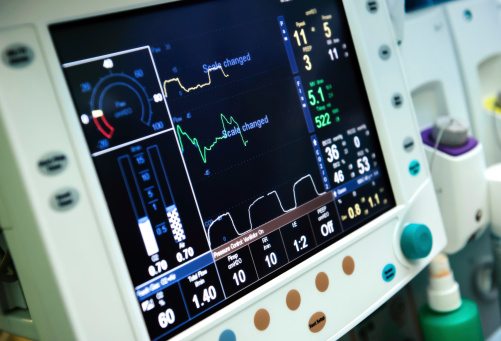 The emergency room is a well-orchestrated place, sometimes looking like coordinated chaos.
“It’s like a dance with a lot of adrenalin. Everyone has their steps they must do to make it all work,” says Jamie Hendrickson, registered nurse in the emergency department at Geisinger Medical Center in Scranton, Penn.
One night, a man came in the door who was very sick.
“I just had this feeling about him, and I knew I needed to stay at his bedside with him,” she says. “As I was talking to him, right way we got an IV in him and gave him antibiotics.”
The nurses and doctors triage patients very quickly, looking to see if there is some form of infection. They get blood drawn and get chest X-rays. Even a cardiologist had been asking this man some questions.
The patient, who was dealing with cancer, had been going through chemotherapy started to code.
“All of a sudden, he just stopped talking,” Hendrickson says. “I’m with three other nurses and the doctors, and they are all working on this patient. We already know what each other needs to do in these situations.”
They get out the paddles and shock him.
“One shock put his heart back into normal rhythm. He woke up instantly, and said, ‘What happened.’ ” Hendrickson says. “All of this happened within a two to five minute period, and then it was done. This person did very well. It could have worked out much worse.”
She says that the teamwork in the emergency department is a big part of what keeps her there.
“We work together. We get through these situations. Not every situation has a good ending, but we sure try,” she says.
Her emergency room sees 48,000 patients a year.
“There is a constant turnover of patients. We are transporting patients upstairs all the time once we take care of them here. The days go by fast. There are times we crave for boredom,” she says.
Explore the country while getting paid.
Being an emergency room nurse means suspense, sadness, teamwork, drama, trauma, chaos, recovery and miracles. It also means split second decisions, staying calm under pressure and caring for patients who depend on your knowledge and skills to get them through some of the worse moments in their lives.
For me, deciding to become a travel nurse, was way more of a personal goal than a professional one. Even before starting nursing school, I knew that traveling was an activity I enjoyed and even think it played a role in me becoming a nurse in the first place. I am going to share my personal travel story with you, along with all my fears and how I prepared myself for the greatest adventure in my life thus far.
Ready to begin your adventure? Start here.
I spent my entire life living, working and attending school in Colorado and I was in need of a change of scenery. My goal was to use travel nursing to explore cities I have never been to, looking for a place that I wanted to spend the rest of my life. I love warm weather, so I kept all my travel assignments in the southern part of the country chasing summer. I also needed a break from my family. I don’t know about any of you, but my family will suck the life out of you if you let them. The third reason I decided to travel was more of a professional one. I only knew of one way of taking care of patients and wanted to see how other facilities functioned in order to expand on my own skills. I was also very involved in the politics of the hospital and was becoming very frustrated with the lack of change that was occurring. I guess you can say that I was in search of a place that could offer me peace and tranquility in both my personal and professional life.
Explore the country while getting paid!
I started preparing myself for travel nursing approximately 6 months prior to my first assignment. I worked with a travel nurse previously who gave me the name of her recruiter and that’s how I chose my travel agency. I didn’t do any research about the company because honestly I didn’t know much about the profession. I had all the paperwork completed within 2 months but I wanted to make sure I had my CCRN (Critical Care Registered Nurse) certification prior to traveling because I thought it would help me get better travel assignments. In between studying for my CCRN and filling out paperwork, I moved out of my place and into a temporary living situation. I downsized all my belongings, only keeping the necessary things that would fit in my SUV.
Speak to a staffing agent today.
I had heard from some nurses that travelers get treated poorly, floated first, and often get stuck with the worst assignments. Being treated poorly was a fear of mine in the beginning, but I quickly learned that people will only treat you poorly if you let them. I was fortunate to “grow up” in an ICU where people were free to speak their opinions without judgement, so I felt very comfortable standing up for myself when I needed to. In reality, I was never treated poorly and most people were very friendly and helpful. They didn’t give me the worst assignments as I feared and in fact, my assignments were really great most of the time.
Another fear of mine was that I was going to lose my critical care “skills.” As a travel nurse, some places will not give you the CRRT’s, swans or the balloon pumps because they have their own staff to take those patients who are certified with that particular equipment. Despite not receiving these types of patients, I still had my fair share of sick ones; Plus, re-learning how to use that equipment is like riding a bike. In reality, I learned many other skills, like being flexible and going with the flow, that are much more valuable than working a machine. In fact, it was my experience with floating that landed me my current staff position.
Discover new travel assignments here.
I knew there were many benefits to traveling, tax free money, free housing, getting paid to travel, and flexibility with time off. What I didn’t realize was that my experience as a travel nurse would forever change the way I take care of my patients, my lifestyle and how I value my family and friends. Not having to participate in the politics of a hospital allowed me to focus on the most important part of nursing…taking care of patients. Floating to different floors allowed me to see how other nurses cared for their patients and ultimately influenced the way I care for mine. I no longer felt the moral distress that accompanies nurses who continuously work in the ICU.
Develop new skills by becoming a travel nurse!
Traveling has made me simplify my life. I realized that I don’t need as much stuff as I thought I did. I lived out of my car for 2 years and survived just fine. Experiences are now more valuable to me than material things. I developed a new sense of pride for my hometown. I realized how amazing Colorado really was and how much it had to offer. I realized that I don’t hate the cold as much as I thought I did. Traveling brought me closer to my friends and family. I didn’t realize how much I missed them until they were too far away. I learned what I love…being active and also what I hate… big cities. I believe that my travel nursing experience brought unimaginable insight into my life.
I know I would not be where I am today, personally or professionally without having experienced travel nursing. At this stage in my life, I feel that being a staff nurse is in my best interest, but the allure of traveling has not left me. I will travel again but next time it will be for different reasons and without fear and worry.
It’s impossible to think back even a few years ago and not be able to identify how some significant technology upgrade has changed the way you live, work, or play. The same is true for those who work in the healthcare industry, especially for those who are on the front lines of patient care – Registered Nurses (RNs). Technology advancements have significantly changed the way that RNs administer patient care, has helped improve workflow and limit human error, and is even making the job safer and less physically challenging.
Take a look at 7 technology enhancements that are slowly being adopted in the nation’s top hospitals and health care facilities that have changed the nursing profession for the better.
Some hospitals are incorporating advanced Communication Systems, in which nurses and other members of the health care team can text message, speak, and receive patient alarms through their smart phone devices using specialized apps. This concept replaces antiquated paging systems, and helps the whole nursing unit stay in touch and work more efficiently with each other.
See the country while getting paid!
Soon, the days of endless paperwork, filling out patient charts, and having doctors fax over medical records will be gone for good as more and more hospitals and facilities convert to EHR, which allows healthcare providers to access patient information with a few keystrokes. With an extensive patient history easily accessible and all in one place, it cuts down on human error, alerts nursing staff to possible drug interactions, and keeps track of diagnostic test results.
Just as GPS tracking has revolutionized the way we travel, a system of tagging and tracking medical equipment can increase hospital efficiency. That’s been the case at Texas Children’s Hospital, which was named the “Most Wired Innovator” by Hospitals and Healthcare Networks, the publication of the American Hospital Association, in part because of its real time locating systems (RTLS). Using radiofrequency identification tags, ultrasound, and/or infrared, the system helps nursing staff locate the nearest blood pressure machine, for example. While this seems simple enough, being able to centrally monitor equipment helps tremendously with bed management and patient care routines, a big RN responsibility, as explained in an article by AmercianNurse.org.
Live in your dream city while doing what you love.
 It makes everyone’s life easier – both RNs and patients – when diagnostic exams can be performed non-invasively. Thanks to new technologies, there are more options available now to perform minimally invasive tests and treatments. This helps lower risk of infection, and over time, is more cost effective. Some examples include nanotechnology like handheld biosensors that can detect a range of diseases from miniscule body specimens. Another example is Texas Children’s Hospital’s use of ultrasound technology to place peripheral IV (PIV).
According to research by Purdue University Global, many hospitals are implementing drug delivery systems in the form of implantable devices that release medication into patients. This aids RNs since they can schedule complex dosing to ensure patients get the medications they need in the right amounts and at exactly the right moment. Not only does this reduce human error, but it allows nurses to focus on other aspects of patient care.
Explore new cities while getting paid.
Walk into any hospital, and you’ll hear the constant beeps and alarms coming from various patient rooms, keeping nurses constantly walking the floors to respond. Oftentimes, the alarms are false, which ends up causing “alarm fatigue.” It also takes the nursing staff’s attention away from more pressing patient matters. To combat this problem, smart alarm technology can better monitor a variety of patient vital signs all through one system, including blood pressure, pulse rate, etc. By having one single integrated system to measure physiological indicators, the alarm system will be more streamlined and efficient.
Discover new travel assignments here.
Here’s a scary stat, but one that if you’re an RN, will probably not surprise you: VA records showed that more than 2,400 of its nursing staff suffer debilitating injuries every year from lifting patients, as reported by NPR. As such, the VA committed to a program back in 2008 to transform all of its 153 hospitals to help prevent nursing staff from getting hurt. A few years later, and the VA has spent more than $200 million on what it calls “the safe patient handling program,” says the article. The centerpiece of these upgrades include patient lifting technology that takes the back-breaking task of moving patients out of nurses’ hands. While many hospitals have such technology in various units, VA hospitals are trying to make the technology the norm for every patient room. Since the implementation of the program in the VA hospitals, they report a 40 percent reduction in nursing injuries from moving patients.
Find available positions here.
Although ever-evolving technology requires RNs to stay up-to-date with the latest innovations, doing so will not only make their jobs more efficient, but also help them maintain a competitive edge for career advancement.
Helping to bring a new life into the world as a labor and delivery nurse can be the best job on earth, says the people that choose this career each and every day.
“I know I will never do any other type of nursing because the thought of not being a part of this is unimaginable,” says Deb Marquez, 46. She has been a nurse for 22 years – 11 in critical care and 11 in labor and delivery. She works in the high risk labor and delivery unit at Nebraska Medicine in Omaha.
Find available travel assignments here.
“We share the miracle of life with patients every day. Although that sounds trite and cliché, seeing patients holding their new baby after having been infertile for 15 years, seeing tears of joy coursing down the parents’ faces, or hearing a sobbed — “I have waited for you for so long” — there is just nothing that could ever compare to that,” she says.
Not every birth is joyous. There also lies a lot of sadness and heartbreak. But to give comfort and strength to grieving parents becomes a very important part of this crucial career.
A few labor and deliver nurses relayed their most touching moments they have experienced in their jobs that keep them coming back to care for these moms, couples and babies.
See the country while getting paid!
It’s easy to imagine the immense jubilance bringing a baby into the world can emote. However, it doesn’t take long as a labor and deliver nurse to know that it’s not all joy and happy outcomes here, Marquez says.
“Interspersed with the good– rarely enough to allow us to keep our sanity, but still there – are situations that no person should ever have to endure,” she says.
Talk to a staffing agent today.
One such moment came early on in Marquez’ labor and delivery experience. It was the beginning of the festive holiday season. A young couple married just a few years were hosting a big dinner at their house. They had family fly in from all corners of the U.S. and were very excited to share in the joy of the season, as well in the anticipation that comes with welcoming a new baby into the world “any day now.”
The soon-to-be mommy arrived at the hospital and first conveyed to Marquez that in all the preparations for the holidays, she hadn’t really thought about fetal movement until that morning.
“She had not consciously felt the baby move for more than a day. I took her to a room and put on the monitors, expecting to hear the reassuring fetal heartbeat sound – the ‘thunka-thunka’ that means so much to expectant parents,” she says.
But there was just empty silence and no movement when Marquez listened to and felt the young mother’s abdomen.
“Despite our attempts to appear optimistic, the couple sensed something was wrong. I will never forget them staring wide-eyed at that ultrasound display, waiting, hoping, praying. There was nothing,” she says.
When the doctor told them, “I’m sorry, there is no heart beat,” the husband let out a cry of such pain that it echoes in Marquez’ heart to this day.
“I will never forget this broken young couple calling their family – all gathered at their house for dinner and sobbing brokenly, ‘He’s gone,’ ‘’ she says.
But through all the sadness and loss they experienced, this couple continue to send Christmas cards and photos every year to Marquez. They now are raising several healthy, thriving children.
“They always express thanks for giving them the courage and strength they needed to try pregnancy again, saying that without my genuine concern they would never have known what true joy is,” she says. “Little do they know that they gave me a gift, too – the courage to help patients face whatever comes next with compassion, the ability to cry with them when something really hurts and to truly connect on a human level to a stranger.”
Discover new L&D travel assignments here!
 Donna Erio of Utah became a nurse in 1978, and has worked in many areas of the United States. She fell in love with being a labor and delivery nurse in 1983 and has stuck with that ever since.
“Having a baby is something that a woman or a couple remembers for their entire life. You don’t forget your birthing experience, and you don’t forget your labor nurse,” she says.
Start your travel career today.
While working a few years at the John C. Lincoln Hospital in Phoenix, many of her patients didn’t speak English. But Erio had lived in southern Florida for a while and learned enough Spanish to understand enough to get by.
“A couple that didn’t speak any English came in to deliver their baby girl. She progressed very rapidly, so I ended up doing the delivery,” she says.
Erio has delivered 67 babies by herself without the doctor there.
“It happens. But I love it. This couple was thrilled to death that I was there. I was clamping the cord with my bloody gloves on and about ready to put the baby on the mom’s chest. She grabs my hand. She looks directly into my eyes and spoke the only words she knew in English, ‘Thank you so much,’ ” she says.
During the rest of her shift, Erio took care of the couple and the baby. The couple asked her where she lived. Erio didn’t think about it much.
Within a few weeks after their baby was born, the couple showed up at her home with a present – a paper mache rooster (which is a symbol of good luck) that the husband had made and placed on a platform.
“I will always keep it. I never thought I’d get a gift when I gave them my address. I thought I’d just get a thank-you card,” she says. “But I’m sharing their most intimate part of their lives with them, bad or good.”
Get matched with a staffing agent here.
She has seen thousands of births. Rachel Huber, 46, graduated in 1990 from nursing school and works as part of the labor and delivery team taking care of the newborn baby at Genesis East BirthCenter in Davenport, Iowa.
“It is a wonderful gift to be part of these people’s lives during one of the most intimate, happy and sometimes stressful parts,” she says.
She remembers one couple who came in to deliver their first baby with such amazing elation.
“They had been trying for four years to get pregnant. They had struggled with infertility,” she says.
After the baby was born, Huber measured, weighed, check vitals and cleaned up the infant to place in the mother’s arms.
“When I gave the baby to the parents, I could see what a gift this child was to them. They were crying and holding each other. It was so emotional and touching to watch so much love,” she says.
Each birth brings similarities and many differences.
“No matter how many times I am in the labor and delivery room, I still have a little bit of apprehension until I hear that baby cry, and I can see that it is healthy,” Huber says. “Labor and delivery isn’t a breeze. There are things that can go from good to bad in seconds. But I have to use my good clinical judgments and my skills.”
Make a difference in lives across the country – start traveling today!
Being a labor and delivery nurse brings a mixture of really good days and really sad days. But it’s about being there for the mothers, the families and the babies with your compassion, your helpfulness, your knowledge and your skills. It’s a career that can bring exhilaration, contentment and pride, and sometimes, there will be tears.

Congratulations to our 2014 TravelNursing.org Sweepstakes winners. Thanks to all who entered.
We randomly selected three RNs to win $500 toward travel to anywhere in the U.S. Here is a little about our three lucky winners:
Mahra became a registered nurse in 2013 and has been loving life ever since.
Ciara loves being an RN in Alabama!
Bryon works at the University of Cincinnati Medical Center in the Medial Intensive Care Unit. He has been a critical care nurse for two years and thoroughly enjoys his job.
Congratulations, and many happy travels to our winners!
I think most nurses would agree with me when I say we get asked a lot of questions. We get asked everything from “what do you think this is?” or my favorite “can you explain what that doctor said because I have no idea what he just told me.” But since I am a male nurse I honestly get asked the question, “So what made you want to become a nurse” the most. My response is always something like this, “I never wanted to be a nurse, I just wanted to help people. Then the whole RN thing just morphed into my signature.“ But in all seriousness, becoming a registered nurse was very challenging but it has become a very rewarding career path. Being a nurse has become second nature to me and I’m proud to call myself one.
When I was younger, I never imagined that I would become a nurse. I say that because while I was growing up in the Midwest I played a lot of sports, and let’s just say I did “OK” in school. I liked sports because they challenged me not only physically but mentally as well. Naturally I thought I would become a star athlete after high school and make millions of dollars. Boy was I wrong! But playing sports has helped develop one of my strongest characteristic – my competitive edge. I have always accepted every challenge my boss’ have ever given me, and then I take it to the next level. I’ve prided myself on being the hardest and most efficient worker. I just the love the thrill of being the best at what I do whether it’s providing the best patient care or just simply doing paper work. I love knowing that I put 100% effort and accuracy into my work. I mean after all wouldn’t you want your healthcare provider to put 100% effort into you care?
Explore new cities while getting paid!
 Before I jumped into nursing school I was actually enrolled at a college to become a Physical therapist. When I was in college “studying” aka playing football with my friends, I learned that becoming a physical therapist didn’t really feed my appetite to help people. I know this because I worked for years as a rehabilitation technician with some of the most amazing physical and occupational therapist around. I learned how valuable their role is in regards to patient recovery, but that inner athlete in me was craving for more. So during my time as a rehab tech, I got to work closely with the nursing staff. I learned how demanding and important nurses actually are to patient care. I saw firsthand how every day was a new challenge and obstacle to overcome. I watched and witnessed how nurses collaborated and assessed, diagnosed, planned, implemented and evaluated their patient care. When it was done correctly and efficiently the whole patient care team benefited from it, including the patient’s outcome. After witnessing this, I changed my major to nursing and started on my journey.
While in nursing school I quickly learned how to properly study and commit myself to my school work. I also discovered that I was drawn into acute care. I loved helping people when they needed my help the most. So after I passed the dreaded NCLEX it was time to start my nursing career. I started working as a floor nurse on a progressive care unit. I learned all of my basic fundamental and nursing assessments skills there. I also met and built some lasting friendship with people. I moved around within the hospital, working in different units. I was trying to find a new home, which would feed that inner athlete in me. I kept on wanting to do more while helping people. Then that’s when I was introduced to travel nursing. I reached out to an old friend I met while working on the progressive care unit. She was already traveling and seems to love every minute of it. So I reached out to her and the next thing I knew, I was a travel nurse.
Discover new nursing assignments in the city of your dreams!
I love traveling! So working as a travel nurse was an easy decision for me. Basically I got paid to travel! What more could you ask for? So for my first assignment, I set my eyes on the west coast mainly because I have never been out west. Why not take this opportunity to do so, and I am so happy that I did. It was an amazing experience! I was able to learn and work with some of the most experienced nurses and Physicians anywhere. I was also able to learn how to deliver care to a new patient population, and I gained valuable experience and some great memories that I will never forget.
Today, I am a Medical Administrator for an occupational health company. I work with acute injuries that people sustain while working on the job site. In my free time, I write articles and post YouTube information videos to help aspiring travel nurses. I am always looking for my next opportunity to help people. Yes, I still get asked the same old questions but recently someone asked me, “If you could go back and do it all over it. Would you choose a different career?” I politely put my smile on and said “No because I don’t think I would be as lucky the second time around.”
Discover new cities while doing what you love!
I have always found the most exciting thing about starting a new travel assignment is getting your schedule and planning your activities. It is not uncommon for the nurse manager on your floor to have your schedule done for your first few weeks by the time you hit hospital orientation; after all, you are there to fill a need.
Most people are generally good about scheduling travelers fairly; meaning not every weekend or spreading your days out (especially on night shift) but this doesn’t happen all of the time. It is important to keep in mind that as a travel nurse your primary role is to help this specific hospital with staffing and to be flexible. If you know you need to have a particular day or weekend off, then it is best to have it written into your contract prior to your start date. I have found many nurse managers are willing to work with your schedule. If you are like me and can’t stand working 3 days in a row, most of the time they will be open to scheduling you accordingly. You can also trade shifts if necessary with the regular hospital staff if you need time off.
Find your dream travel assignment!
Travel nursing is flexible in many different aspects, however, assignment start dates and number of hours worked are not one of them. Assignment start dates are based on that specific hospital’s orientation dates, which are usually every 2 weeks. The human resources department and your nurse manager have to prepare for your arrival by scheduling preceptors and so on, so it is vital that you stick to your intended start date. There are some facilities that will actually charge you a fee for canceling your contract prior to starting or changing your start date.
Speak to a staffing agent today.
The search for a new travel assignment usually begins approximately 1 month before your current contract ends. Your company likes to have you thinking ahead 2 months before your contract ends to prepare for licensure and other required education. I have signed a new contract within as little as 2 weeks prior to my start date, which I would not recommend. If you are new to traveling, then the search will begin once you have all of your paperwork completed. When you are searching for a travel assignment, your nurse recruiter will be able to tell you when the start date is, whether it is a day or night shift position, and if it will be 12 hour shifts or some alternative (the majority of travel assignments are 12 hour shifts with the exception of interventional radiology or cath lab positions, which are usually four 10 hour shifts or five 8’s); It is important to understand these three elements before starting because they are usually set in stone; remember, you are there to fill a need and it is expected that you work as your contract says you are going to.
New assignments available across the country.
As with any healthcare setting, there will be times when your facility is slow and may need to cancel one of your shifts. The number of shifts that you are allowed to be cancelled are written in your contract. Most companies allow you to be cancelled 1 shift per pay period without having any financial penalties such as paying for your housing. If you call in sick often or are not meeting the minimum required hours to pay for your housing, meal stipends and other reimbursements, then you may be required to pay out of pocket for those expenses. There are very few travel nursing companies that offer vacation or sick pay, so it is of utmost importance to be financially prepared for time off. I would recommend purchasing your own accident insurance to cover your bills in the event that you are hurt off the job; in the travel world, if you don’t work, you don’t get paid. This is also the case for time off in between assignments. If there is a specific city that you want to travel to but the start date is many weeks after your current assignment ends, it is possible to extend for a few weeks if your company allows it so you don’t go unpaid for such an extended period of time. Hospital orientation is paid for but may leave you short a few hours, so make sure you budget appropriately in between assignments.
Explore the country while getting paid!
Being flexible and adapting to a constantly changing environment is what being a travel nurse is all about. Companies choose to hire us because they know they can count on a travel nurse to get the job done on short notice and a small amount of preparation. Understanding what is expected of you and coming to your travel assignment prepared mentally, emotionally, physically and financially sound are all important aspects of being an experienced and well-traveled travel nurse.
Speak to a staffing agent today.
The variety of living in Los Angeles versus a small Cape Cod town; or San Antonio versus Boston, or Washington state wine country versus Washington D.C. can be intoxicating – our country is so versatile. From big bustling cities to small quaint towns and everything in between; this is why we travel. We get to experience it ALL!
Start your travel adventures here.
My husband and I both grew up in very small towns in Missouri. Especially at the beginning of our travel nursing journey, all of the excitement was in experiencing living in large cities for the first time. However, as time has gone on we have ended up with quite the variety of assignments ranging from a 52 bed facility to a 927 bed facility – and everything in between.
I would say that hospitals in almost all (if not all) major US cities use travel nurses quite frequently. There seems to always be travel nurse positions in NYC, LA, San Francisco, Houston, Phoenix, San Diego, Dallas, etc. The facilities in these cities are often large as well and commonly part of a large hospital system with several sister facilities and/or a teaching hospital.
Smaller towns and smaller facilities are also in abundance, but probably more sporadic. For instance, as a traveler at any given time you can say I want a job in Los Angeles and there will be options no doubt. However, if you want something in your hometown of say, Joplin, MO – that can be pretty hit or miss. There are assignments there sometimes, but not on an ongoing basis that you can count on. Plus, when there is a position available it might literally be ONE position, not several. In LA you can typically weed down the assignments based on unit, shift, pay, etc. But in the smaller towns/facilities it’s more of a take what you can get type of scenario.
Discover whats available in your dream location.
The major differences between larger and small cities are pretty obvious. Larger facilities are typically used to seeing lots of travel nurses whereas smaller ones may not get that many. I wouldn’t say that means one is more traveler friendly than the other though, it all depends on the facility and people there. Getting called off is more likely to happen at a smaller facility though, for obvious reasons. They don’t typically take as many or as extreme cases and therefore don’t always stay as full.
The smallest hospital my husband (Skyler) has worked at was in a little beach community on the edge of Cape Cod, MA. The main thing he says was different working there versus many of the other facilities he has worked at was that since they didn’t have much experience working with travelers we had a few issues with them disregarding his contract. Most issues involved scheduling. Their idea of having a traveler was to use him when/wherever they needed him, be it a 4 hour evening shift or a 16 hour shift…yeah, it was nuts! He is used to working 12 hour days, period. So that was an interesting situation, but very atypical. He has worked at other small facilities with zero issues. One small hospital in Washington was probably one of the best to work with schedule wise actually. So again, I think it has much more to do with the facility and manager versus the size of the hospital/city.
Discuss your options with a staffing agent today.
Q: Does one pay more than the other?
A: I don’t think there really is a good rule of thumb regarding pay in travel nursing. I feel like it can be all over the place, honestly. However, in general, larger cities/facilities tend to pay more than smaller ones. That being said, sometimes a small town that is undesirable to most, especially if it’s during their bad weather season, can pay more. One thing we have found to be true though is that states where nurses are part of a union do tend to pay travelers more.
Q: Are there certain specialties that are more common for travel nurses in either a big facilities vs smaller facilities?
A: Yes. Highly specialized positions will typically not be offered in smaller towns/facilities (CVICU, NICU, Neuro ICU, etc.). Small hospitals generally can’t support such specialized units. This is probably why we have taken more assignments in large cities (Skyler is a CVICU nurse).
Q: What are the housing differences?
A: Housing in small towns is typically quite a bit cheaper than it is in large cities (although your housing allowance should reflect that). However, smaller towns tend to have fewer housing options. In a large city you will have lots to choose from. But in a smaller town there might not even be an apartment community. You might even have to live in a different town and commute. We have never taken an assignment in a super small town where there were zero options. However in Cape Cod our company rented us a house because there were no apartment communities. It was pretty awesome though actually!
Q: Is there a difference in cost of living?
A: I’m sure there is somewhat, but I don’t feel like it affects a traveler too much if your agency is providing housing. I feel like housing is where cost of living is felt the most, and so if that isn’t an issue we don’t really feel the effects of cost of living too much. It is typically going to cost more to eat out or maybe even to get gas or groceries in a larger city, but for us at least it isn’t so significant to persuade our decision either way.
The debate of big versus small, when comparing travel nurse positions at least, is a matter of personal preference. Skyler and I tend to prefer the larger cities, or if it’s a smaller town one that is very close to a large city. However, another ex-traveler I know specifically sought out small communities. And to that effect – we almost always choose warm locations, and they almost always chose the mountains. As you are trying to decide what assignment to take, get online and do a little bit of research and/or speak to the nurse manager at the facility about what there is to do in the area, the size of the hospital and unit, the housing market, etc. Get a feel for the area and hospital to help you make your decision on what is right for you.
Find available travel assignments here.
Have you just accepted your first travel nurse assignment and are thinking, “Now what?!” or have you been at it a while and thinking there has to be a better way to prepare for a new assignment? We have been at this for five years now and have about got it down to a science. That being said, we are always tweaking the way we prepare for an assignment to be as efficient as possible. And we have learned over the years that every traveler has their own way of doing things. My advice is to use my tips as a guideline and make your own personal tweaks along the way.
Find your dream assignment here.
 Once you verbally accept a travel nurse assignment things start moving fast, and you have to keep pace! Your recruiter might put you in touch with customer service and housing, depending on the company, and you will have a list a mile long of things they need you to complete. Just keep in constant communication with them and get them everything they need asap. This will range from licenses, ID, miscellaneous paperwork, tax forms, and testing…lots. of. testing. Each position/facility/agency has different requirements, but do not procrastinate. If you don’t have your stuff done on time, you will be sent home (or won’t even be deployed), so just get it done in a timely fashion.
New travel jobs available now!
While you are working on making your file compliant, it is also important to get things at home in order for while you are gone. This is going to mean something different for everybody, depending on your specific circumstances. We always try to spend time with all of our close friends and family when home (and eat at our favorite restaurants – haha). Some things to keep in mind regarding your permanent residence when preparing for a travel assignment include:
Once your affairs are in order and your file is in compliance it is time to start thinking about what/how to pack for a travel assignment. As I described above, every traveler I have met has their own unique way of doing things and it involves a lot of trial and error. But in general, LESS IS MORE! As you pack, think to yourself, “Do I like this item so much that I am willing to unpack and re-pack it 4-6 times a year?” You will be surprised with how little you really need. Before we had a baby, we finally got our travel items down to what would fit in the back of our Suburban, which was perfect. Moving was quick and easy. We got to take enough items to feel comfortable, but not so much we were stuck un/packing for a week at the beginning and end of each assignment (like we do now). Trust me, it gets old fast if you take too much junk! I love shoes, so I tried to bring all of my shoes in the beginning. But I soon realized that it just wasn’t worth it to me to lug around a huge box full of shoes when I might wear most of them maybe once a year. So now I travel with a few favorite, versatile pairs. On the flip side, our Keurig and Crock Pot have definitely earned their keep on our travel list, whereas somebody who prefers to just eat out probably wouldn’t need those items. Below is a list of items I recommend taking. You will notice a lot of stuff not on the list that you might think are must haves. But for us, we rebuy things (at the dollar store) for each assignment (like plates, trash can, etc.) in order to keep our packing load a bit lighter.
Travel jobs available across the country – find your perfect assignment
I have an initial shopping list saved to my computer that I print before each move. I usually try to make it to a Target or Wal-Mart and a grocery store within the first couple of days. And for us, this shopping trip is costly and usually takes a while. You have to essentially restock a house each time, so budget accordingly. These lists are just a start to get you to thinking about what specific things you need to take care of as you prepare for a travel nurse assignment. But of course, everybody’s situation is different. My advice is to start your own “to do” list and as you think of something new, add it to the list! And try to pack as minimal and compact as possible! It will make your experience as a traveler much more enjoyable, I promise!
New travel jobs available now!
Networking as a nurse is something you simply don’t learn during nursing school. Believe it or not, you are actually networking right now as you read this article. Networking is simply interacting with other people in order to gain information to better yourself. This is huge in nursing and there are a variety of ways you can do this. Like I said before you are already utilizing one method of networking, which is by searching and reading articles on the internet. The internet has a huge database of information that is just sitting there waiting for you to read.
Discover new travel assignments here!
Another way you can better fine tune your networking skills is by representing yourself as a nurse. You can do this by joining some of the many professional websites that are out there. By representing yourself in a positive way, it can help you build outside relationships with people and could help you find new opportunities to grow as a nurse. Before I applied for my current job I utilized the internet in researching the position and company. I talked to several key contacts I have made over the years by networking and I was able to check on the company I was applying for. These skills help me land a great job as a Medical Administrator with a fantastic company.
Talk to a staffing agent today.
 Some of the credible websites I have used in the past are LinkedIn, American Nurses Association, and the American Association of Critical Care Nursing. These websites can help you do research on current evidence based practices, discuss topics, and learn about other companies and jobs out there for nurses. Some sites require a membership fee or a monthly due, but in return you get a ton of articles and current research to read from, as well as current events that are going on. Some companies will even mail you a monthly magazine.
Explore the country while getting paid!
There is also a vast amount of social media blogs you can join. Within these websites you can also discuss trending topics while connecting with other nurses. This connection will allow you to build a solid bridge of networking and develop a good business relationship with others. By building these relationships with people you will start seeing your networking profile grow, and it will allow you to build a more professional image to co-workers and future hiring managers. Another way to network is by simply reaching out to co-workers, job shadowing and meeting new people within your current organization. You will eventually develop a relationship with that person that could open a door of opportunity for you in the future.
Connect to open travel jobs by clicking here.
If you are a Travel nurse then you already know the importance of networking. The power of networking allows you to reach out and find those much desired contracts. The reason networking is so important for a travel nurse is because she/he represents themselves 24/7. They are not working with a permanent hospital which allows them to move through the ranks. They also do not have a boss who will watch you grow and recommend you for a promotion. Travel nurses only have themselves to rely on in order to grow. By networking with other nurses or your recruiter, it will keep your professional image buffed to perfection in which by doing so could land you a permanent job at a hospital after your contract expires.
So as you travel it is important to keep in contact with your new friends. You could try utilizing social media sites such as Facebook and twitter. Just be careful what you post and what you say because it could reflect your professional imagine in a negative way. If you are a travel nurse and want to grow your networking skills within the company you work with, simply pick up the phone and reach out to your recruiter who can help you get started and build a new professional profile for you to use.
Start your travel adventure today!
Whether you use internet, social media, or by simply looking up travel nursing videos on youtube.com, networking will allow you to grow professionally and personally. I learned this skill early as a nurse and have met and worked with some of the most amazing people around. By utilizing the skills listed above I went from a typical floor nurse, to a travel nurse, to blogger on YouTube about travel nursing, which brought me to writing articles online, all the way to finding my current position. Where will your networking take you? I hope it’s as rewarding to you as it has been for me. Look me up on LinkedIn or YouTube and start networking!
RNs can make up to $2,300 per week as a travel nurse. Speak to a recruiter today!